



By Paul | Feature 021 | The Regulars
In most sports, I play to win. I started padel this summer, and I’m already thinking about entering tournaments.
Golf’s different. Most of the rounds I play aren’t about the score.
Don’t get me wrong, I’m competitive. I want a few of those magic shots. But I won’t let the score ruin the day.
Over the last five years I’ve been all over the world to play golf, and it’s the experience that keeps me coming back. The scenery. The focus. No screens. Time to switch off.
The weather too. I’m a fair-weather golfer, which isn’t ideal when you live in England. So we chase the sun.
And the most laughs always come from the bad shots, not the good ones. If every shot was good, it would be boring. No funny remarks, no comments, no jokes. Just pure competition. Too serious for me.
The people I play with are a real mix. Some play for fun, some to catch up, some to get better. Some of my friends play for the score, and that’s fine. I just don’t let it get in the way of my day.
That’s a big part of why I started Room19. Golf is brilliant away from the scorecard, and hardly anyone tells that side of it.
What is the average golf handicap in England?
The average golf Handicap Index in England was 19.37 in England Golf’s published 2024 data: 18.60 for men and 29.33 for women. Those figures cover club members and iGolf subscribers with an official Handicap Index, so they describe golfers in the handicap system rather than everyone who picks up a club.
That doesn’t mean the average golfer shoots 19 over par. With a full record, a Handicap Index is based on the best eight of the most recent 20 score differentials, which account for course difficulty. It reflects demonstrated ability, rather than an average score.
So if you’ve ever walked off the 18th thinking you’re the worst player at the club, a bad round alone doesn’t tell you that.
It’s also why so many people read the handicap as a scale of shame, when it was never meant to be one. We dug into that in The Misread.

How many golfers in England play off scratch?
About 1% of golfers with an official Handicap Index in England play off scratch or better, according to England Golf figures reported in December 2025. The breakdown was 1.1% of men and 0.5% of women; these percentages describe handicap holders, rather than everyone who plays golf in England.
Scratch means a Handicap Index of 0.0. It doesn’t mean shooting level par every time you play.
The golf you see on TV is played by a tiny few. The rounds I know have rather more “where did that go?”
It’s the same reason the perfect swings on your feed can make your own game feel worse than it is.
How much golf in England is played outside competitions?
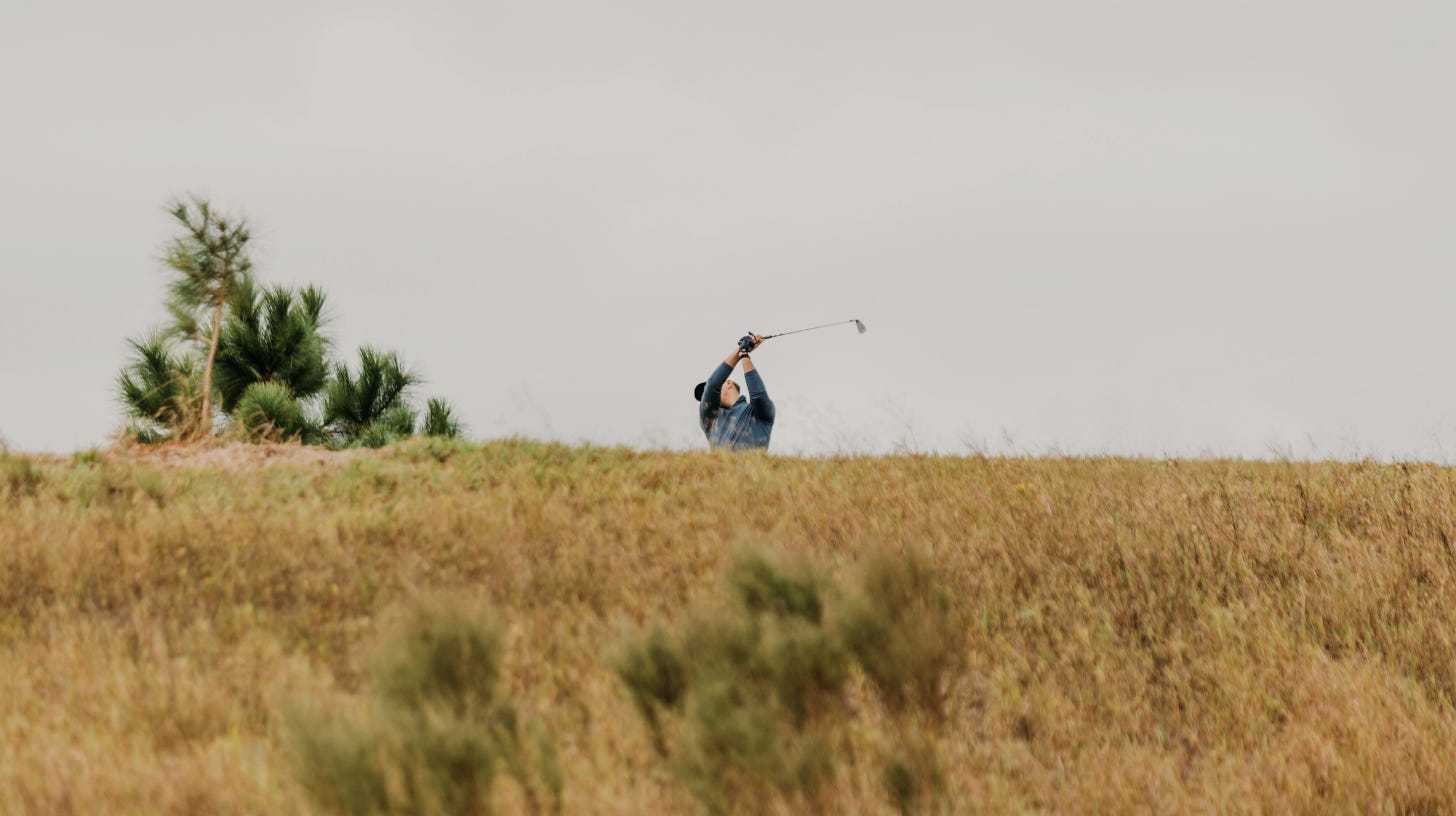
General play accounted for 52% of handicap scores submitted in England in 2025, according to England Golf’s annual figures. The number of general-play submissions grew 26% compared with 2024, but those figures measure submitted scores, not every round played or whether golfers were trying to beat their friends.
That distinction matters. A round outside a club competition can still be fiercely competitive. General play isn’t another way of saying nobody cares about the score.
But the figures do show how much recorded golf happens outside organised competitions.
For me, keeping a score and letting it decide whether I’ve had a good day are two different things.
Why play golf if you’re not trying to get better?
Golf can be worth coming back to for the company, the time outdoors and the occasional shot that stays with you, even when your handicap doesn’t move. That’s my experience, rather than a claim about every golfer: I still want to hit good shots, but improvement isn’t the only reason I book another round.
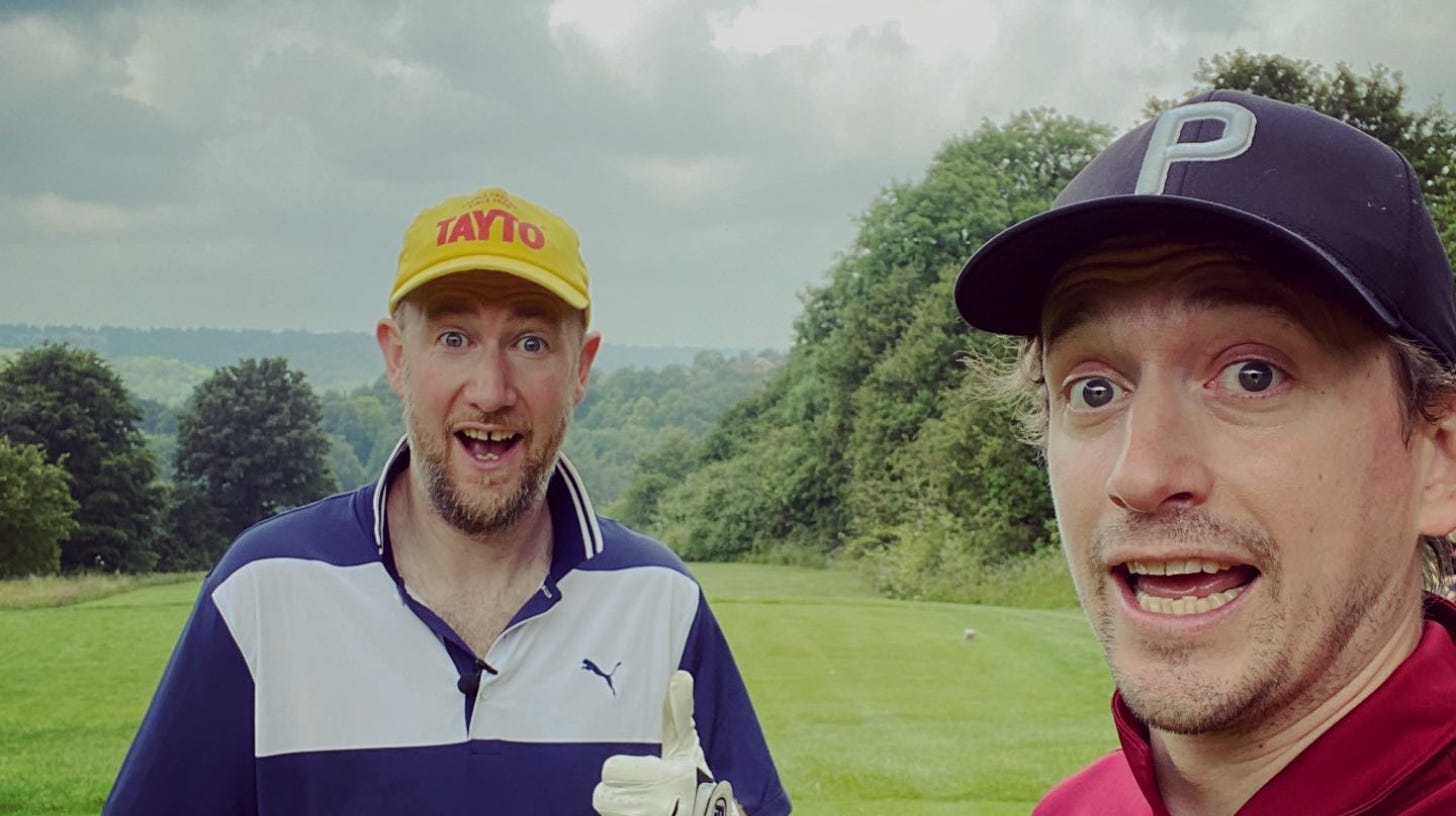
Alex Horne, the man who made Taskmaster, put it better than I could on the Golf Is Ruining My Life podcast in July 2026. He plays off 17.6. That’s almost exactly the average English male golfer. He handed in cards for a golf trip with his friend John Robins, and his scores ranged from 103 to 84.
“I just go and hit the ball. And if once every five rounds you get it in from quite a long way away, great. But I’m not going to improve.”
He had one lesson when he was 30. That’s how he got into golf. He hasn’t had one since. He also has a theory that winning is a bit embarrassing, in golf and in most things. On Taskmaster, he says, the people who come last are often the nation’s favourites.
One of our community members said it even better. After we ran Horne’s story, @drakeydistiller left this in our comments:
“This is so good, I’m chuffed, Alex Horne expressing what for me is the perfect golf ethos. Its why I play, collecting numbers is not for me. Collect shapes, mindful days, craic, laughs, strikes, flushes, tops, whiffs, views and moments.”
Now that’s a round I recognise.
Why do you play golf? Here’s what you told us
[CONDITIONAL SECTION. Two routes, depending on what comes in from the “You know you’re a golf regular when...” post and the “Why do you play golf?” question.
Route A, if 3 or more good replies land: pick 3 to 5 that each say something different. DM each person first for permission and how they’d like to be credited (handle or first name). Format:
“[Their words, trimmed only for length.]” @handle
Route B, if fewer than 3 land: delete this whole section heading and body. The closing section already asks readers the same question, so the piece still ends on an invitation. If good replies come in later, add them as an update at the bottom of the post: “Update: here’s what you told us.” Substack posts can be edited after publishing, so nothing is lost.]
Do you need to be good at golf to start?
No. You can start learning golf before you have a handicap, and the World Handicap System allows a maximum Handicap Index of 54.0 for all golfers. A handicap helps players of different abilities compete more fairly; it isn’t a qualification you must earn before you’re allowed to pick up a club.
Individual courses and competitions can set entry requirements, so check before booking.
If the thing stopping you is the feeling you need to be good first, you’re allowed to learn while you’re doing it.
And if it’s the feeling that everyone will be watching, we’ve written about that invisible barrier too.
You don’t have to begin with a full afternoon, either. Nine holes still count as golf.
The Regulars
For me, a golf regular is someone who keeps turning up because there’s something in the round they want to come back for. It might be the company, the quiet or the one good shot; being a regular says more about wanting another round than where you sit on a handicap table.
They know the trees on the 7th better than the fairway. The score never makes it into the group chat, but the story does.
On the drive home they’ve forgotten the score, but they still remember the one good shot. And they’ve booked the next round before they’ve left the car park.
You don’t have to get good at it to have a reason to keep coming back.
So tell me. Why do you play golf? One word is fine. Or finish the sentence: you know you’re a golf regular when...
Paul is the founding editor of Room 19, a golf brand telling the untold stories of the game for people who found it through culture, not the clubhouse. Before Room 19, he spent around 20 years in brand strategy and media. He took up golf at 37. Find Room 19 on Instagram and TikTok.
I started Room 19 to get more people into golf and take the fear out of it. The game is changing, driven by the people playing it, but the way it presents itself hasn’t caught up. Room 19 tells the stories that bust the myths and close that gap.
Previously in Room 19
012 | The Misread, on the handicap system most people mistake for a scale of shame. https://www.room19golf.com/p/golf-handicap-misread
009 | The Overexposed, on why the perfect swings on your feed make your own game feel worse than it is. https://www.room19golf.com/p/golf-average-handicap-social-media-perfect-swing
004 | The Invisible Barrier, on why the fear of being watched keeps more people off the course than the cost. https://www.room19golf.com/p/golf-real-barrier-isnt-money
017 | The Shortcut, on why golf never said it had to be 18. https://www.room19golf.com/p/nine-hole-golf-no-time
Sources
England Golf’s figures, reported by Golf Business News, 23 April 2025.
England Golf’s 2025 figures, reported by Golf Business News, 9 January 2026.
Golf Is Ruining My Life podcast, Alex Horne episode (17 July 2026):
Image credits: header image via Unsplash; @drakeydistiller.
Restarted golf at 66 having not played for 30 years. I play golf for company.