


By Paul, Founding Editor, 19 Handicap
Issue 018 | The Walkthrough
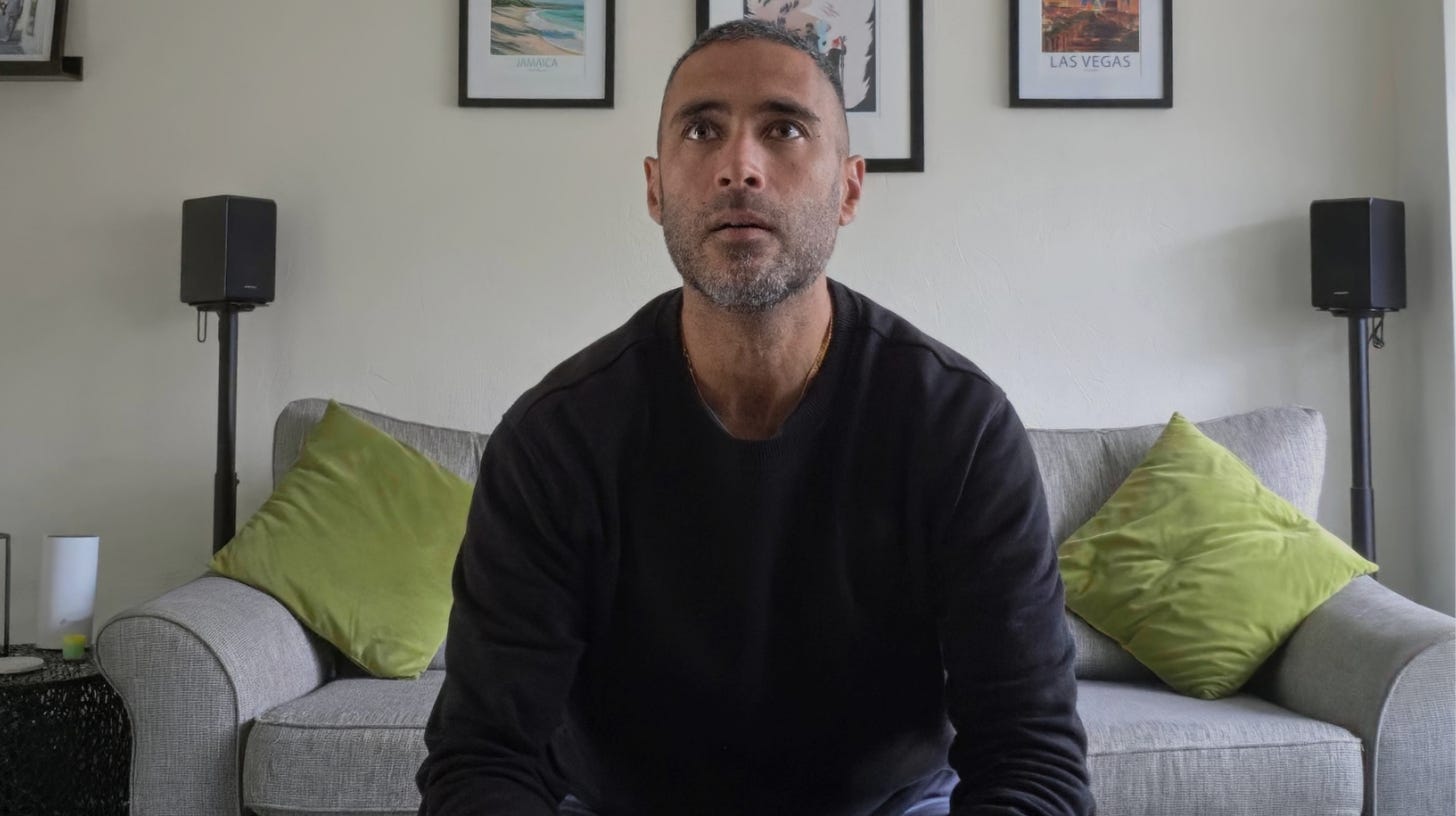
The worst first tee I’ve ever had, I duffed it. Three times. One after the other. And someone told me I should be playing off the ladies’ tees.
As if the ladies’ tees were the insult.
For years after that, I was nervous on the first tee. Especially if people were watching, or a group was waiting behind me.
Then there was The Belfry. Burnley’s football team were staying at the hotel, and they were out on the course with their morning coffee before their game that afternoon. Watching the tee shots.
I hit a good one. But at a venue like that, with that lot watching, it was nerve-racking.
It still is now, if I’m honest with myself. You know that first shot is being watched, and it can set up your whole day.
So I’ve got a little routine the night before.
Why do golfers get nervous on the first tee?
Because everyone’s watching, and you’ve never seen the hole.
On the range, every ball sits up nice. No wind. No trees. No queue behind you. Then you walk onto a real course. Slopes. Long grass. A lake nobody mentioned. And a group of strangers waiting for you to get on with it.
The first tee adds something the range doesn’t: social pressure. You’re hitting a shot in public, often on an unfamiliar course, knowing other golfers are waiting behind you.
That feeling isn’t unusual. First-tee nerves are common enough that coaches and sports psychologists treat them as a normal part of the game. I’ve written before about the bigger version of this problem too: the fear of being watched can stop people getting onto a golf course in the first place.
The swing gets all the attention. But for most of us, the scary bit is everything around it.

Golf games have changed too
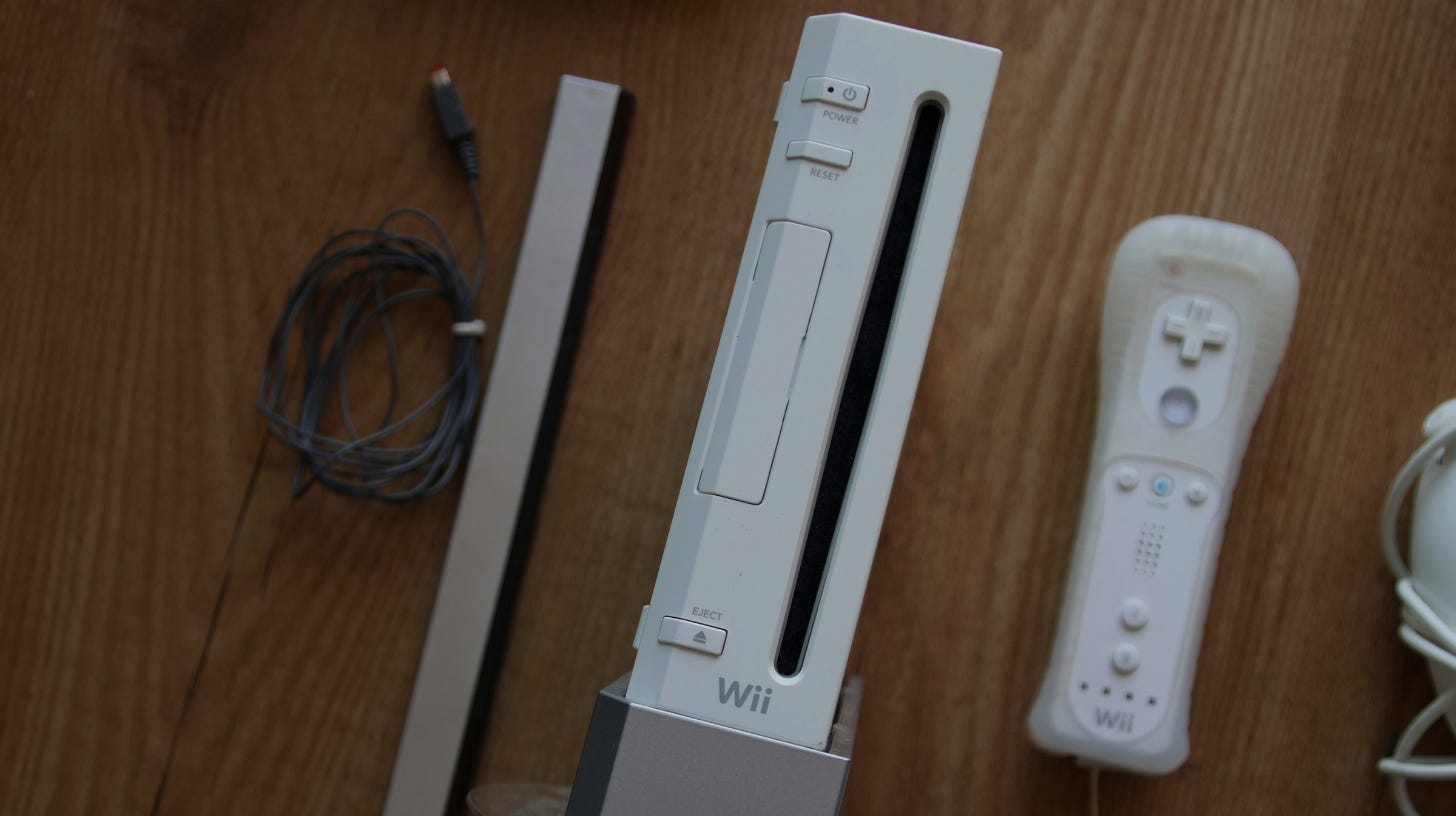
For a lot of people my age, virtual golf started with Wii Sports. It sold 82.9 million copies and golf was one of its five games.
I was one of them. Before I played golf properly, I’d play the Wii version. But it never made me feel more prepared for an actual course.
Modern golf games are different.
They’re detailed enough to show you something much more useful: what a golf course might actually ask you to do.
Can a golf video game help you prepare for a real course?
Yes, but not by teaching you how to swing.
It can show you the course.
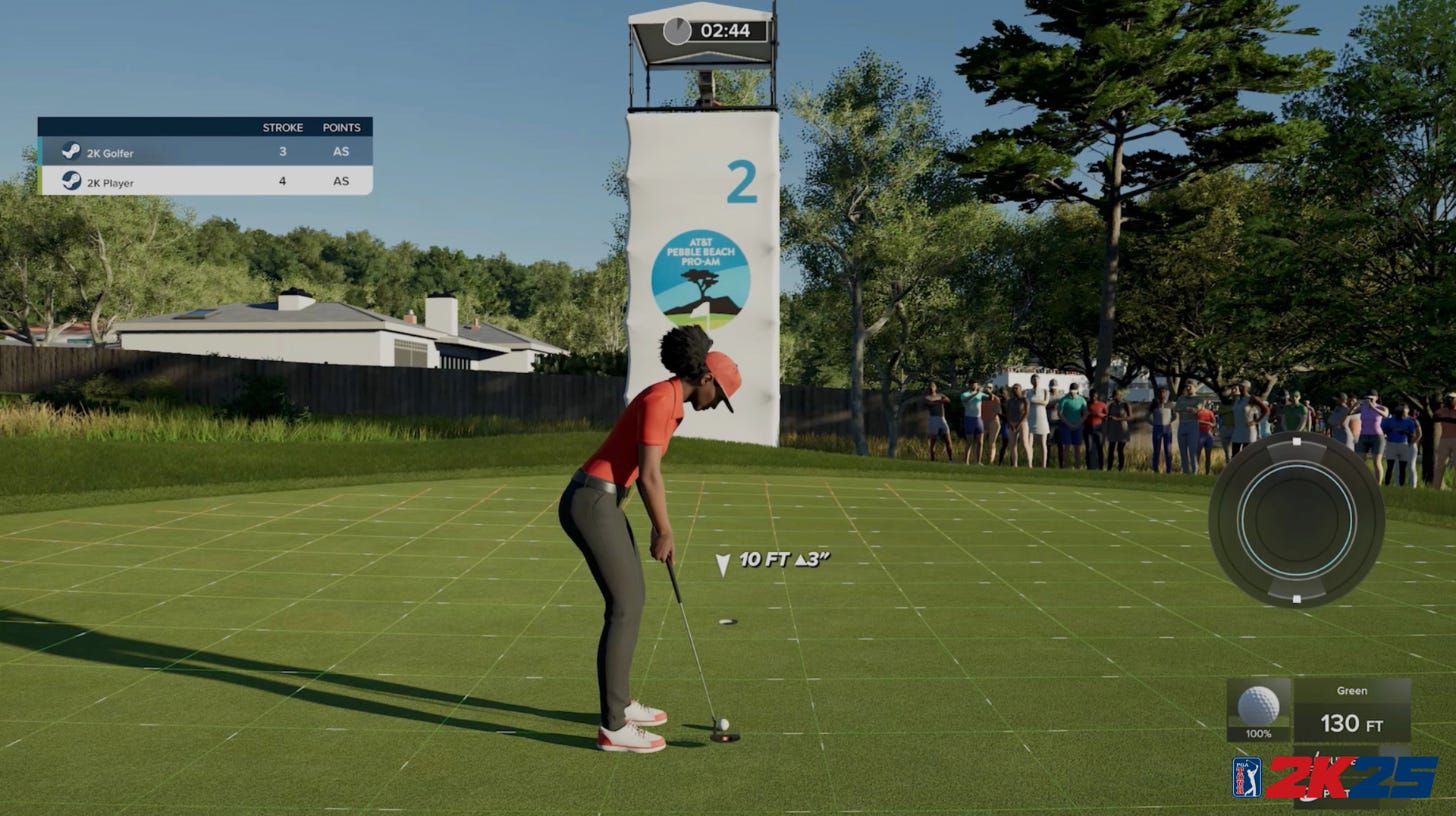
In PGA Tour 2K25, the wind pushes your ball about. Miss the fairway and you’re in the long stuff, same as real life. Same with sand. And people build their own courses in the game and share them.
So here’s my routine.
My course usually isn’t in the game. Doesn’t matter. I pick ones that look like it and go looking for the trouble.
Where’s the water? Where are the safe places to land it? What happens if I miss right? How does the ball bounce in different conditions? How quick are the greens?
The night before my last round, at a course in Kent, that’s exactly what I did.
“The night before golf, I’ll fire up PGA 2K25. Not for my swing, you can’t do that with a stick. I’m looking for the trouble and the safe spots. By the morning, I’ve already played the round in my head. It feels a lot less intimidating.”
One thing it won’t do, as far as I can find, is let you type in your own yardages. Your distances come from your player and your clubs in the game.
So don’t treat it like a launch monitor.
It’s not about the numbers. It’s the picture.
Can a video game help you read greens?
Yes, and this is the bit that surprised me.
It’s the slope that helps. In the game, you can see which way the green falls, so you aim your putt for the slope and think about the weight.
When I walk onto a real green after doing that, the process feels familiar. Look at the slope. Find the line. Think about the pace.
I’m not the only one. MyGolfSpy’s Tyler Allred credits PGA Tour 2K23 with helping his putting, mainly by training his eye for line and pace.
He’s also clear that a game can’t replace practising on real greens.
Fair.
For me, it’s one less thing that feels new on the day.
Can VR golf improve your real golf swing?
This is where it gets a bit more about performance. So I’ll be honest about it.
I’ve also got a Meta Quest 3 headset with GOLF+, the PGA Tour’s official VR golf game. You clip a club attachment onto the controller and swing it like a club. The weight feels quite close to the real thing.
This one is about the swing. It’s practice at home, with the feel of a club in your hands.
The console is different.
That’s about the course.
Is there any proof VR practice carries over? A bit.
A 2023 University of Tennessee study had 68 people practise putting, half in a shop-bought VR mini golf game and half on a real green. Both groups got better at real putting by about the same amount.
That’s putting, not the full swing. And it’s one small study.
So I wouldn’t say VR fixes your swing.
But it’s not nothing.
Do the pros do this?
At least one did.
In 2023, Korn Ferry Tour pro Ryan McCormick built the tournament courses that weren’t already in PGA Tour 2K himself, using satellite pictures. About half a day per course.
“For me, I get to play two rounds for every tournament round out here,” he said.
He told GOLF.com he uses it to “solidify the picture that I want on that hole during the week.”
A tour pro and a 19 handicap doing the same thing the night before.
I like that.

How I prepare for a new golf course the night before
Play it first. Or the closest thing to it.
Pick a course that looks like yours. Trees, hills, by the sea. It doesn’t need to be the real one.
Stop on every tee. Have a proper look. Where’s the water? Where’s safe? Where absolutely isn’t?
Picture every shot. Use the game to practise where the ball should go, not how you hit it.
Turn the assists off. As many as you can. You want it to feel like the real day, not like a game that’s helping you.
Hit some bad ones. You’ll hit a hundred shockers on the sofa. So one on the day isn’t the end of the world.
The Walkthrough
You’ve still got to swing it on the day. Nobody can do that bit for you.
But you can walk onto that first tee knowing what trouble might look like. Knowing how to look at the green. Knowing you’ve already thought your way around a golf course once, in your joggers, with nobody watching.
It won’t remove the nerves completely.
I’m not sure anything does.
But there’s a difference between being nervous somewhere completely unfamiliar and being nervous somewhere you feel you’ve already seen.
The first tee doesn’t have to be the first time.
Does the first tee still get you? And have you ever played a course on a console first? Drop a comment.
Paul is the founding editor of Room 19, a golf brand telling the untold stories of the game for people who found it through culture, not the clubhouse. He took up golf at 37. Find Room 19 on Instagram and TikTok.
I started Room 19 because I wanted golf writing that treated the game the way the culture magazines I read treat everything else, properly, not as tips, gear reviews and FOMO shots of golf courses. If you want the next one first, subscribe below.
Previously in Room 19
Issue 004 | The Invisible Barrier — on why the fear of being watched keeps more people off the course than the cost.
Issue 009 | The Overexposed — on why the perfect swings on your feed make your own game feel worse than it is.
Issue 010 | The Format — on why golf is booming while courses keep disappearing.
Issue 015 | The Heads Up — on why golfers shout fore when it isn’t a rule.
Quick answers
How do you overcome first tee nerves in golf?
First tee nerves in golf can be reduced by making the opening hole feel less unfamiliar. Learn the layout before you arrive, identify the obvious trouble and safe areas, and decide on a simple plan for your first shot. Playing the course, or a similar one, in a golf video game beforehand is another way to familiarise yourself with the decisions you'll face, although it won't replace real practice.
Can golf video games help you on a real course?
They can help with course awareness and visualisation, although they can’t teach you how to swing a golf club. Golf games can expose you to hazards, different lies, wind, slopes and green-reading decisions before you encounter them on a real course.
Can PGA Tour 2K25 help you learn a golf course?
PGA Tour 2K25 can help you understand how different types of golf courses play, including hazards, wind, terrain and green slopes. If the exact course you’re playing isn’t available, playing a similar course can still help you practise thinking your way around one.
Can VR golf improve your real golf game?
There is some evidence of skills transferring between VR and real golf. A 2023 University of Tennessee study found that people who practised putting using a commercial VR mini-golf game improved their real-world putting by a similar amount to people practising on a real green. That doesn’t mean VR can replicate or fix a full golf swing.
Do professional golfers use video games to prepare for tournaments?
Some have. Korn Ferry Tour professional Ryan McCormick used PGA Tour 2K to recreate tournament courses from satellite images and other data, allowing him to familiarise himself with a course before playing it in competition.
Sources and numbers
Wii Sports, 82.9 million copies. Nintendo figures via GameSpot (May 2024). Most copies came bundled with the Wii console.
Best-selling sports video game ever, per Guinness World Records. Golf was one of its five games.
PGA Tour 2K25 launched 28 February 2025 with wind, lie and terrain affecting shots and an upgraded Course Designer, per 2K via Business Wire.
VR putting practice carried over to real putting in a study of 68 people using a commercial VR mini-golf game. Markwell, Cochran and Porter, University of Tennessee, PLOS ONE (2023).
GOLF+ is the official VR game of the PGA Tour.
Ryan McCormick built Korn Ferry Tour courses in PGA Tour 2K from satellite images and public survey data, about half a day each, according to the PGA Tour and GOLF.com.
Tyler Allred, “Can Video Games Make You Better At Golf?”, MyGolfSpy (May 2026).
The opening, the routine, the greens and VR experience, and the advice are Paul’s own.
Image credit: Newsroom PGA 2K25, Mccormick_ryan via Instagram